 +31 (0)20 573 03 50
 EN
EN NL
NL BE
BE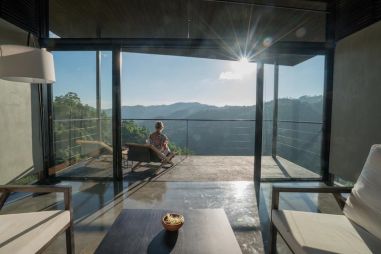
Mental Balance: why your nervous system shapes how you feel
For a long time, wellness programmes were built around structure and discipline. Early mornings, juice fasts, intense workouts and meticulously scheduled days. The formula was clear: structure would restore balance.
That approach is gradually shifting, in response to what daily life actually looks like for many people. Constant stimulation, long working hours and a pace that rarely truly slows down. As a result, the body often exists in a persistent, low-level state of tension. Not a crisis or a burnout, but a quiet, underlying strain that never quite goes away. The nervous system stays active even during moments that are supposed to be restful. Taking a break, in other words, does not automatically mean recovering. Nervous system recovery calls for something different. Not full days of activity or rigid schedules, but predictability, a sense of safety and time spent in a genuinely calm state. Less performing, more attention to rest.
A growing number of hotels are quietly recalibrating this approach, not by offering more, but by deliberately offering less. Activities still exist, but without pressure. No fixed expectations, no emphasis on achievement: invitations rather than obligations, designed to require as little mental effort as possible.
Sleep is often seen as a practical starting point for nervous system recovery, because it is measurable and its effects are relatively immediate. Beyond that, a natural rhythm of day and night, appropriate light, quiet surroundings and time in nature all play a role. Together, these factors can help the body shift down a gear.
Ultimately, people are not looking for more experiences. They are looking for an environment in which the body has the space to settle. Below you will find a selection ranging from short resets to longer stays.
- What the nervous system actually does
- When the 'on' state becomes the default
- Recovery does not begin in the mind
- What can help you shift down
- Not every wellness hotel offers the same kind of rest
- From short resets to longer stays: a selection
- Short stay (3 to 5 days)
- Mid-length stay (5 to 7 days)
- Longer stay (7 days or more)
What the nervous system actually does
The nervous system governs how your body responds to everything that happens around you, automatically, without conscious effort. At its most basic level, it moves constantly between two states: an active state, in which you are alert, responsive and making decisions, and a recovery state, in which the body slows down and has the chance to recharge. These two states are meant to alternate. Active during the day, then back to rest. The problem is rarely that someone never rests. It is more often that the body no longer fully recognises what rest is.
When the 'on' state becomes the default
For people with demanding and responsible lives, it is not uncommon for the active state to remain switched on longer than necessary. Thinking ahead, adapting quickly and remaining available are deeply ingrained habits, and the mechanism behind them tends to keep running even when nothing is being asked of you. This does not feel like stress in any obvious sense but more like a subtle, persistent undercurrent of tension. You might notice it at night, when you wake up and your mind slowly starts turning again. Or during the day, when sitting still unexpectedly feels unsettling. Sometimes it shows up in small ways, such as less patience than usual or difficulty truly switching off. The body keeps quietly ticking over, without ever fully coming to rest.
Recovery does not begin in the mind
Mental fatigue is often thought of as something cognitive, as though it can be resolved by thinking differently or planning more efficiently. But recovery tends to begin in the body. When the body relaxes, something shifts: breathing becomes calmer, heart rate drops, sleep deepens. And with that, the mind often finds more space as well. As long as the body remains in its active state, the mind will follow.
What can help you shift down
Recovery does not require dramatic changes, but it does require the right conditions. It often begins with rhythm, not a single moment of rest, but repetition. Small, recurring moments in which the body has the chance to slow down. Physical cues can play a supporting role, such as conscious breathing, body-focused treatments or gentle movement. These act as signals that help the body move out of its active state. The surrounding environment matters too. Fewer stimuli, more nature and distance from the everyday context can all help the system settle more quickly. Guidance can sometimes help with this. Someone who supports and offers direction, so that you do not have to keep managing it yourself.
Not every wellness hotel offers the same kind of rest
What works for one person does not necessarily work for another. That applies to wellness hotels too. A spa and a swimming pool can contribute to relaxation, but for some people they are not enough to allow the body to truly slow down. Factors such as the busyness of the environment, the structure of the programme and the level of guidance available can all make a difference. The selection below is not exhaustive, but it is based on a set of principles we consider important: a calm environment, attention to pace, and an approach that invites rather than obliges. Whether a particular hotel suits you depends, in the end, on what you need.
From short resets to longer stays: a selection
The hotels below have been selected on the basis of a few clear principles. No busy environments or packed programmes, but places where stimuli are kept to a minimum and the pace naturally slows. The focus is on the body, with treatments, breathwork and therapies that can help you decelerate. And no obligations, no group pressure, no fixed social schedule, but space to shape your stay in the way that works for you.
Short stay (3 to 5 days)
For those with limited time who still want to slow down
A few days can start to shift something, provided the environment is right. The focus here is on rest and reducing stimulation. No intensive programme, just space. Many guests notice they sleep more soundly, feel a little clearer in the head or simply have more breathing room. What you experience will vary from person to person.
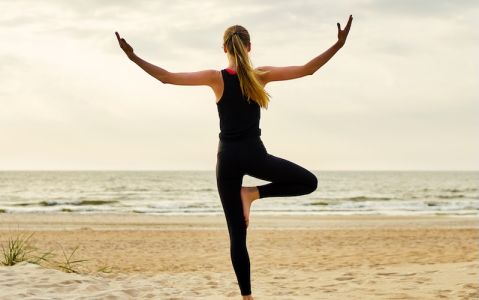
Yoga Weekend at Badhotel Domburg | The Netherlands
Badhotel Domburg sits at the foot of the dunes, with the forest, beach and fresh Zeeland sea air all within easy walking distance. A practical choice for anyone wanting to slow down in the Netherlands without travelling far. Our yoga weekends offer a gentle programme with four sessions and plenty of free time. You decide whether to visit the spa, book a treatment, walk along the beach or simply settle into the library.
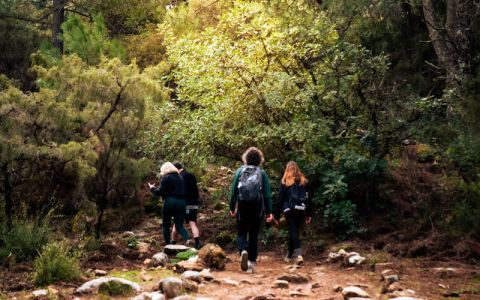
Shanti-Som | Spain
Tucked into the mountains of Andalusia, with views across the Sierra de las Nieves, Shanti-Som is a small-scale retreat where calm and personal attention are central. The Balinese architecture, garden and deliberately unhurried atmosphere are designed to encourage disconnection. Retreats are available from three nights and range from daily yoga to lighter programmes with treatments and optional coaching.
Mid-length stay (5 to 7 days)
More time for the body to decelerate
If you find yourself still switched on after a few days, a little more time may make the difference. The body sometimes simply needs more space to move out of a long-held state of alertness. During this kind of stay, some guests notice their sleep becoming deeper, their rhythm feeling more stable or a greater sense of mental clarity beginning to emerge. Gentle guidance is available, but never compulsory.
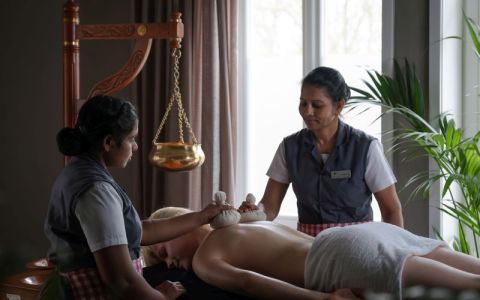
Park Am See Nattika | Germany
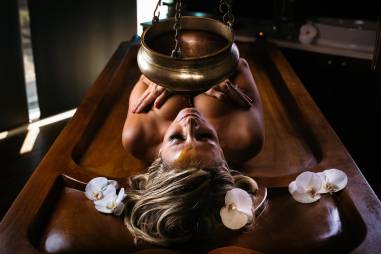
An Ayurvedic programme is a purposeful way to slow down and support the body's recovery from within. At Retreat Park Am See Nattika, an Ayurvedic team from India puts together a personalised treatment plan following an individual consultation. Alongside daily treatments, there is space for yoga and a supportive diet based on Ayurvedic principles. A good choice for those who want a degree of structure without anything feeling overly intensive.
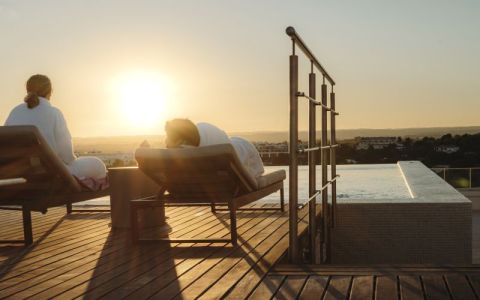
Longevity Health & Wellness Hotel | Portugal
Longevity is set on a quiet hillside in the Algarve, overlooking the bay of Alvor. The hotel combines spa treatments with medical expertise, and its programmes range from accessible to more targeted, depending on what you are looking for. Those who want a structured personal programme can follow one; those who prefer to set their own pace can simply use the facilities and join daily activities as they see fit.
Longer stay (7 days or more)
For those who sense that rest alone is not enough
Has your body been sending signals for some time? A longer stay with more targeted support may be worth considering. Think of programmes with optional guidance, sleep-focused approaches or body-centred therapies. Still no pressure, but more structure for those who feel they need it. Some guests find that after a stay like this they have more energy or find it easier to let go. It is not a treatment, but an environment that can support recovery.
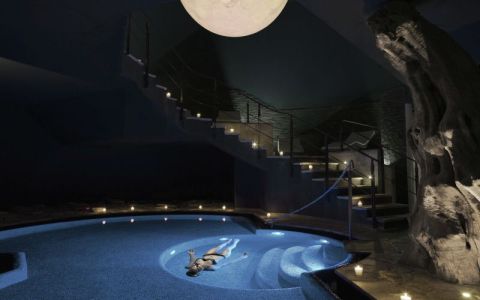
Lefay Lago di Garda | Italy
Lefay sits high above Lake Garda and is known as one of Italy's finest wellness resorts. The house speciality is Classical Chinese Medicine, integrated with contemporary Western approaches. Programmes are tailored individually, with treatments focused on relaxation, energy or sleep. Highlights are the setting, the spa and the calm atmosphere. A strong choice for anyone seeking guided support in an environment built entirely around it.
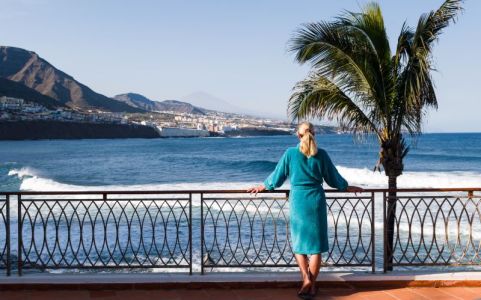
OCEANO Health Spa Hotel | Tenerife
OCEANO sits directly on the sea in the green, untouristy north of Tenerife, wedged between the Atlantic and the Anaga mountains. The hotel has its own F.X. Mayr Centre, where specialist physicians oversee medically guided detox and recovery programmes. Those looking for something gentler can opt for a thalassotherapy or Ayurvedic approach instead. A family-run hotel with serious medical foundations: the right place for anyone who wants professional eyes on their recovery.
About Marleen
This blog is written by Marleen, founder of PureandCure.com (established in 2005). She travels around the world in search of the best Health & Wellbeing Hotels, Spas and Retreats and shares her insights, experiences and observations through her blogs.